10 Powerful AI Fundamentals Every Beginner Needs to Understand Artificial Intelligence

Artificial intelligence, commonly known as AI, has quickly become one of the most important technologies in the modern world. From chatbots and smart assistants to recommendation systems and automated business tools, AI is becoming part of everyday life.
For beginners, however, artificial intelligence can sometimes seem complicated. Technical terms such as machine learning, neural networks, algorithms, natural language processing, and generative AI can make the subject difficult to understand.
That is why learning the AI fundamentals is a useful starting point. You do not need to be a programmer or technology expert to understand the basic ideas behind artificial intelligence. Once you learn the core concepts, it becomes much easier to understand how AI systems work, where they are used, and what their benefits and limitations are.
This guide explains the most important AI fundamentals in simple language and provides a practical introduction for anyone interested in learning about artificial intelligence.
What Is Artificial Intelligence?
Artificial intelligence refers to computer systems designed to perform tasks that normally require certain forms of human intelligence.
These tasks can include recognizing patterns, understanding language, analyzing information, making predictions, solving problems, and generating content.
Traditional computer programs generally follow instructions written by programmers. AI systems can often use data and algorithms to identify patterns and produce useful outputs.
For example, an email service may use AI to identify potentially unwanted messages. A streaming platform may analyze viewing behavior to recommend content. A smartphone may use AI to recognize faces in photographs.
These applications may look very different, but they all involve computer systems processing information to perform tasks that require some level of intelligent behavior.
Why Are AI Fundamentals Important?
Learning AI fundamentals provides a foundation for understanding modern technology.
Instead of simply using AI tools, you can understand what happens behind the scenes. This knowledge can help students, professionals, business owners, and everyday users make better decisions about AI.
Understanding the basics can also help people recognize the limitations of AI. Artificial intelligence is powerful, but it is not perfect. AI systems can produce incorrect information, reflect problems in their training data, or make predictions that require human review.
A basic understanding of AI can therefore help people use these technologies responsibly and effectively.
How Does AI Work?
At a basic level, many AI systems work by processing information using algorithms and data.
An algorithm is a set of instructions or procedures used to solve a problem or perform a task. In AI, algorithms can be designed to identify patterns within data and use those patterns to produce predictions or decisions.
For example, imagine a system trained to identify different types of flowers. It could be provided with many examples containing information about flower characteristics. During training, the system can learn patterns that help distinguish one category from another.
The quality of the results depends on several factors, including the data, model design, training process, and how the system is evaluated.
What Is Machine Learning?
Machine learning is one of the most important concepts in AI fundamentals.
Machine learning is a field of artificial intelligence in which computer systems learn patterns from data rather than relying entirely on manually written instructions for every situation.
There are several major approaches to machine learning.
Supervised Learning
In supervised learning, a model learns from examples that include known answers or labels.
For instance, a system could be trained using images labeled as either “cat” or “dog.” By analyzing many examples, the model can learn patterns that help it classify new images.
Unsupervised Learning
Unsupervised learning works with data that does not have predefined labels. The system attempts to discover patterns, groups, or structures within the information.
This can be useful for tasks such as customer segmentation, data exploration, and identifying unusual patterns.
Reinforcement Learning
Reinforcement learning involves an agent interacting with an environment and receiving feedback based on its actions.
The system learns which actions can lead to better outcomes over time. This approach has been used in areas such as robotics, games, and optimization problems.
What Are Neural Networks?
Neural networks are another important part of AI fundamentals.
A neural network is a computational model inspired loosely by the way biological neurons process information. It contains interconnected units that can process data and learn patterns.
Simple neural networks may contain relatively few layers, while deep neural networks can contain many layers. This is where the term deep learning comes from.
Neural networks have become particularly useful for tasks involving images, audio, language, and other complex data.
For example, neural networks can be used for image recognition, speech processing, language translation, and many other applications.
What Is Deep Learning?
Deep learning is a specialized area of machine learning that uses neural networks with multiple layers.
Deep learning has contributed significantly to recent advances in artificial intelligence. It can process large amounts of data and identify complex patterns that may be difficult to capture with simpler methods.
Deep learning is commonly associated with applications such as computer vision, speech recognition, recommendation systems, and generative AI.
However, deep learning often requires significant amounts of data and computing resources. More complexity does not automatically mean that a system will produce better results in every situation.
Natural Language Processing
Natural Language Processing, or NLP, is another major AI concept.
NLP focuses on enabling computers to process and work with human language.
Examples include:
- Chatbots
- Language translation
- Text classification
- Speech recognition
- Sentiment analysis
- Search systems
- Text summarization
NLP allows people to interact with technology using natural language instead of relying exclusively on traditional computer interfaces.
Modern AI assistants and language-based applications have made NLP especially visible to everyday users.
What Is Generative AI?
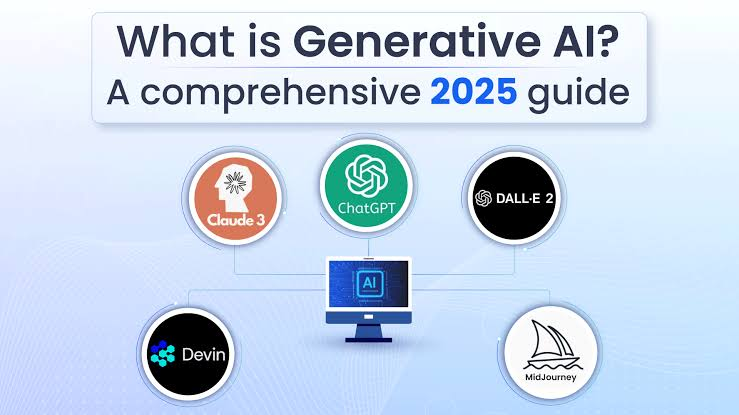
Generative AI is a category of artificial intelligence that can create new content based on patterns learned from existing data.
Depending on the system, generative AI can produce text, images, audio, video, computer code, and other forms of content.
AI writing assistants, image-generation systems, and conversational applications are examples of technologies that use generative approaches.
However, generated content should not automatically be assumed to be accurate. Users should review important information, especially when the output involves business decisions, financial matters, legal topics, health information, or other areas where mistakes can have serious consequences.
Common Applications of Artificial Intelligence
AI is used across many industries and everyday activities.
Healthcare
AI can assist with analyzing medical information, supporting research, identifying patterns in data, and improving certain administrative processes. Healthcare applications require appropriate oversight because accuracy and safety are especially important.
Education
AI tools can help students practice concepts, summarize information, generate study materials, and support personalized learning experiences.
Business
Companies use AI for customer support, data analysis, forecasting, marketing, automation, and document processing.
Finance
Financial organizations can use AI for fraud detection, risk analysis, customer service, and other data-intensive tasks.
Transportation
AI can support route optimization, traffic analysis, driver assistance systems, and other transportation applications.
Entertainment
Recommendation systems can analyze user preferences to suggest movies, music, videos, games, and other content.
Benefits of Understanding AI Fundamentals
Learning the basics of artificial intelligence can provide several advantages.
First, it improves digital literacy. As AI becomes more common, understanding its basic principles becomes increasingly useful.
Second, AI knowledge can improve workplace productivity. Employees who understand how AI tools work may be better prepared to use them appropriately.
Third, AI fundamentals can help people evaluate AI-generated information more critically.
Finally, learning the basics can be a starting point for people who want to pursue careers in technology, data science, software development, machine learning, or AI research.
Limitations and Challenges of AI
Artificial intelligence has impressive capabilities, but it also has limitations.
AI systems can produce inaccurate results. A system may appear confident even when its answer is incorrect. This is particularly important when using generative AI.
Another challenge is bias. If training data contains problematic patterns, an AI system may reproduce or amplify them.
Privacy is another important consideration. Organizations should carefully consider what information they provide to AI systems and how that information is handled.
There are also concerns involving security, intellectual property, transparency, employment, and responsible use.
Understanding these limitations is just as important as understanding the capabilities of AI.
How Beginners Can Learn AI Fundamentals
The best way to learn AI is to start with basic concepts instead of immediately trying to understand advanced mathematics or complex programming.
Begin by learning the difference between artificial intelligence, machine learning, deep learning, and generative AI.
Next, learn basic concepts such as algorithms, datasets, models, training, testing, predictions, and evaluation.
After that, beginners can explore simple practical projects. For example, you might experiment with a basic classification model or use an AI tool to understand how prompts affect generated responses.
People interested in technical AI careers can gradually move into programming, statistics, linear algebra, data science, and machine learning frameworks.
The learning process does not have to happen all at once. Consistent practice and curiosity are often more valuable than trying to learn everything immediately.
The Future of Artificial Intelligence
AI technology is developing rapidly, and its role in society is likely to continue expanding.
Businesses are exploring ways to automate repetitive tasks, analyze large amounts of information, improve customer experiences, and create new products.
At the same time, governments, researchers, companies, and communities are considering how AI should be developed and used responsibly.
Future AI systems may become more capable, but human judgment will remain important. Understanding when to trust an AI system, when to verify its output, and when human expertise is necessary will become an increasingly valuable skill.
Final Thoughts
Understanding AI fundamentals is an excellent first step for anyone interested in artificial intelligence. You do not need advanced technical knowledge to begin. By learning the basic ideas behind machine learning, neural networks, deep learning, natural language processing, and generative AI, you can develop a clearer understanding of how modern AI systems operate.
Artificial intelligence offers many opportunities, but it also introduces important challenges. Learning about both sides can help users make informed and responsible decisions.
Whether you are a student, professional, business owner, or simply curious about technology, learning AI fundamentals can provide valuable knowledge for an increasingly AI-driven world.