AI Career: How Artificial Intelligence Is Creating New Opportunities for Business Owners

Artificial intelligence is no longer something reserved for large technology companies or research laboratories. Today, AI is becoming part of everyday business operations, from customer service and marketing to data analysis, content creation, sales, and automation. As businesses adopt these technologies, the demand for people with practical AI skills continues to grow.
For business owners, understanding an AI Career is not only about hiring AI specialists. It is also about recognizing how AI-related skills can improve a company’s productivity, reduce repetitive work, and create new opportunities for growth.
Whether you own a small business, manage an online company, or run an established organization, learning about AI careers can help you make better decisions about hiring, training, and technology investment.
What Is an AI Career?
An AI Career is a professional path that involves working with artificial intelligence technologies, tools, systems, or applications. It can include highly technical roles such as machine learning engineering and data science, but AI-related careers are much broader than that.
Many modern professionals use AI without being programmers. Marketing specialists, business analysts, customer support managers, content creators, project managers, and sales professionals can all develop AI skills that make their work more efficient.
This means an AI Career can take different forms depending on a person’s background and goals.
Some professionals build AI systems, while others use existing AI tools to solve business problems. Both areas are becoming increasingly valuable as companies look for practical ways to use artificial intelligence.
Why AI Careers Matter to Businesses
Businesses constantly look for ways to save time, improve customer experiences, and operate more efficiently. AI can help with many of these challenges.
For example, a company may use AI to analyze large amounts of information, draft marketing materials, answer common customer questions, organize documents, or identify patterns in business data.
This creates a need for employees and professionals who understand how to use AI effectively.
For business owners, investing in AI skills can provide several advantages:
- Faster completion of repetitive tasks
- Better use of business data
- More efficient customer support
- Improved marketing workflows
- Greater employee productivity
- Faster research and analysis
- More opportunities for automation
The goal is not necessarily to replace people with technology. In many cases, the better approach is to help employees work alongside AI so they can spend more time on creative, strategic, and customer-focused activities.
Popular AI Career Paths
The AI industry offers many different career paths. Business owners should understand these roles because they may become important when building an AI-focused team.
1. AI Engineer
AI engineers develop and implement artificial intelligence systems. They may work with machine learning models, software applications, automation systems, and AI-powered products.
This is generally a technical career requiring programming and an understanding of AI technologies.
2. Machine Learning Engineer
Machine learning engineers focus on systems that can learn from data and improve their performance. They often work with algorithms, models, programming languages, and large datasets.
Businesses that develop AI products may require machine learning professionals to build and maintain these systems.
3. Data Scientist
Data scientists use data to identify trends, answer business questions, and support decision-making. AI and machine learning can be important parts of their work.
For businesses, data scientists can help turn large quantities of information into useful insights.
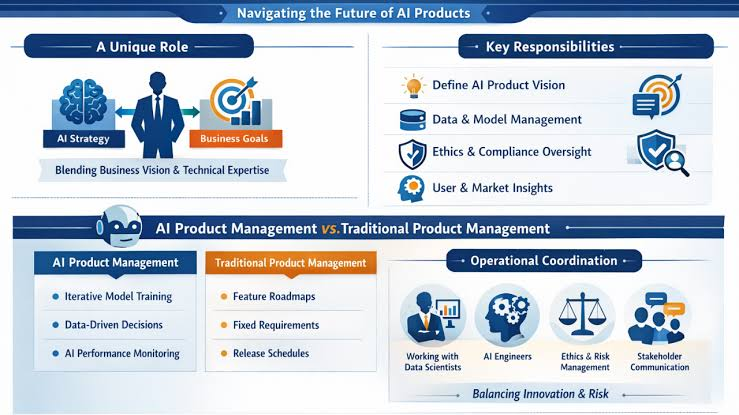
4. AI Product Manager
An AI product manager connects business goals with technology. Instead of focusing only on programming, this professional considers what customers need and how AI can be incorporated into a useful product or service.
This can be an especially valuable role for companies developing AI-powered products.
5. AI Consultant
AI consultants help organizations understand where artificial intelligence can be used effectively. They may analyze business processes, recommend tools, identify automation opportunities, and help companies create implementation strategies.
For small and medium-sized businesses, an AI consultant can provide practical guidance without requiring the company to build a large internal AI department.
6. AI Marketing Specialist
Marketing is another area where AI skills are becoming valuable. AI marketing specialists may use artificial intelligence for research, customer segmentation, content ideation, campaign analysis, personalization, and workflow automation.
However, human judgment remains important because marketing requires understanding customers, brands, emotions, and business objectives.
7. AI Content Specialist
AI content specialists use artificial intelligence tools to support content planning, research, drafting, editing, and optimization.
The most effective professionals do not simply generate text and publish it. They combine AI assistance with human expertise, original insights, fact-checking, editing, and brand knowledge.
What Skills Are Needed for an AI Career?
The skills required depend on the specific career path. A technical AI engineer needs a different skill set from a business professional who uses AI tools.
However, several skills can benefit almost anyone working with artificial intelligence.
AI Literacy
AI literacy means understanding what AI can do, what it cannot do, and how to use it responsibly.
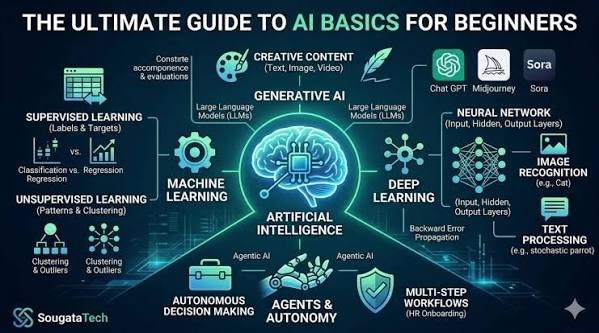
Business owners and employees should understand basic concepts such as generative AI, machine learning, automation, prompts, data, and AI limitations.
Prompting Skills
Many AI systems respond to instructions or prompts. Learning how to communicate clearly with AI can improve the quality of the results.
A useful prompt usually provides context, explains the desired outcome, and includes relevant requirements.
Critical Thinking
AI can produce incorrect, incomplete, or misleading information. Professionals therefore need the ability to review AI-generated results rather than accepting everything automatically.
Critical thinking is one of the most valuable skills in an AI-focused workplace.
Communication
AI tools can assist with many tasks, but businesses still depend on people who can communicate ideas clearly with customers, employees, partners, and teams.
Strong communication combined with AI knowledge can be particularly useful for managers and business professionals.
Data Understanding
A basic understanding of data can help professionals make better decisions about AI. This includes knowing how information is collected, organized, interpreted, and protected.
Technical professionals may need advanced data skills, while business owners may only need a practical understanding of how data affects AI systems.
How Business Owners Can Prepare for an AI Career Environment
Business owners do not necessarily need to become AI engineers. Instead, they should focus on understanding how AI can support their business objectives.
The first step is to identify repetitive activities.
Look at tasks employees perform every day or every week. These might include responding to common questions, preparing reports, summarizing information, organizing documents, researching topics, or creating routine marketing materials.
Once these activities are identified, the business can investigate whether AI can assist with them.
The next step is to train employees.
An employee who understands how to use AI responsibly may be able to complete certain tasks more quickly while maintaining quality. Training can also help employees understand privacy, security, accuracy, and appropriate use.
Businesses should also establish clear AI policies. Employees need to know which information can be entered into AI systems and which confidential information should remain protected.
AI Career Opportunities for Small Businesses
Small businesses can benefit significantly from AI because they often operate with limited time and resources.
A small business owner may not have the budget to hire a large technology team, but they can still use AI tools to support everyday operations.
For example, an online store could use AI to help organize product information and answer frequently asked questions. A marketing agency could use AI for research and brainstorming. A professional services company could use AI to summarize documents or organize internal information.
The key is to use AI where it solves a real problem.
Businesses should avoid adopting technology simply because it is popular. An AI tool is valuable when it saves time, improves quality, increases revenue, reduces costs, or provides a better customer experience.
Is an AI Career Only for Programmers?
No. Programming is important for many technical AI careers, but it is not required for every AI-related position.
A business professional can develop an AI Career by learning how to apply existing AI tools to marketing, sales, operations, customer service, research, or management.
For example, someone with a background in sales may become an AI-focused sales operations specialist. A marketer may specialize in AI-assisted marketing workflows. A project manager may learn how to integrate AI into project planning and reporting.
This creates opportunities for professionals who already have industry knowledge and add AI skills to their existing expertise.
In many cases, combining AI skills with industry experience can be more useful than learning AI in isolation.
How to Start an AI Career
Anyone interested in an AI Career can begin with fundamental knowledge.
Start by learning the basic concepts of artificial intelligence and experimenting with widely available AI tools. Practice writing clear prompts, reviewing results, and identifying situations where AI provides genuine value.
Next, choose a specific area.
Instead of trying to learn every aspect of AI, focus on a business function such as marketing, sales, finance, customer service, operations, or data analysis.
Create practical projects to demonstrate your skills. For example, you could develop an AI-assisted customer support workflow, create a content research system, or design an automation process for repetitive administrative tasks.
Practical experience can demonstrate your ability to use AI to solve real problems.
The Future of AI Careers
The future of AI careers will likely involve collaboration between humans and intelligent technologies.
As AI tools become more capable, businesses will need professionals who understand both technology and human needs. Technical expertise will remain important, but skills such as communication, creativity, strategic thinking, problem-solving, and industry knowledge will also matter.
For business owners, this means hiring decisions may increasingly focus on how candidates can work with AI rather than whether they know AI alone.
Companies may look for people who can identify useful applications, evaluate AI-generated information, manage workflows, and connect technology with measurable business outcomes.
The organizations that approach AI thoughtfully may have an advantage because they can use technology without losing the human judgment that makes businesses successful.
Frequently Asked Questions About AI Career
1. What is an AI Career?
An AI Career is a professional path that involves working with artificial intelligence technologies or using AI tools to solve business and workplace problems. It can include technical roles such as AI engineering and machine learning as well as non-technical roles in marketing, sales, management, and operations.
2. Is an AI Career good for the future?
Yes, an AI Career can offer strong opportunities as businesses continue adopting artificial intelligence. Professionals who understand AI and combine it with useful business or technical skills can find opportunities across many industries.
3. Do I need programming skills for an AI Career?
Not necessarily. Some AI careers require programming, mathematics, and machine learning knowledge, but many AI-related roles do not. Professionals can use AI in areas such as marketing, customer service, content creation, sales, and business operations without becoming programmers.
4. What skills are important for an AI Career?
Important skills include AI literacy, critical thinking, communication, problem-solving, data understanding, and the ability to use AI tools effectively. Technical roles may also require programming, statistics, machine learning, and data science skills.
5. How can business owners benefit from AI skills?
Business owners can use AI skills to identify repetitive tasks, improve productivity, analyze information, support customer service, create marketing content, and automate selected workflows. AI can help businesses save time and focus more resources on important strategic activities.
6. Can small businesses use AI?
Yes. Small businesses can use AI for many practical activities, including customer support, marketing research, content planning, administrative work, data analysis, and workflow automation. The best approach is to choose AI applications that solve specific business problems.
7. How can I start an AI Career?
You can start by learning basic AI concepts, practicing with AI tools, and choosing a specific area such as marketing, sales, data analysis, or business operations. Building practical projects can also help demonstrate your AI skills and experience.
8. What are some popular AI Career options?
Popular AI-related career options include AI engineer, machine learning engineer, data scientist, AI product manager, AI consultant, AI marketing specialist, and AI content specialist. The right option depends on your existing skills, interests, and career goals.
9. Will AI replace human workers?
AI may automate some repetitive tasks, but many jobs still require human judgment, creativity, communication, leadership, and decision-making. Instead of simply replacing workers, AI can also change how people perform their jobs and create demand for new skills.
10. Why should business owners learn about AI careers?
Understanding AI careers helps business owners make better decisions about hiring, employee training, technology adoption, and future business planning. As AI becomes more common, having people with practical AI knowledge can help businesses use the technology responsibly and effectively.
Final Thoughts
An AI Career can mean many different things. It may involve developing advanced artificial intelligence systems, managing AI products, analyzing data, consulting with businesses, or simply using AI effectively within an existing profession.
For business owners, the most important lesson is that AI is not only a technology investment. It is also a skills investment.
Businesses that help their teams understand AI can discover new ways to improve productivity, serve customers, and compete in changing markets. At the same time, professionals who combine AI knowledge with real-world business expertise can create valuable career opportunities.
The best way to approach an AI Career is to start with practical problems, learn the technology gradually, and focus on creating measurable value. AI can be powerful, but its real business value comes from people who know when, where, and how to use it.