Mastering Google Digital Marketing for Better Online Visibility

In today’s competitive digital world, simply having a website is not enough. Businesses need to make sure potential customers can actually find them when searching online. This is where Google digital marketing becomes an essential part of a successful online strategy.
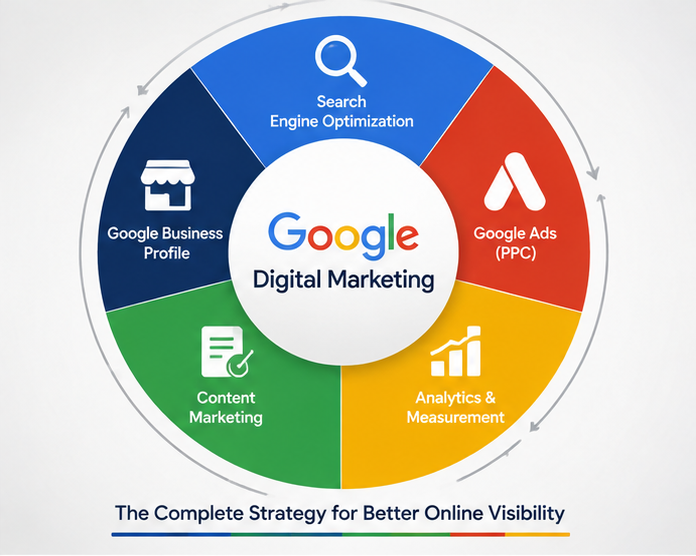
Google offers businesses multiple ways to improve visibility, attract targeted visitors, generate leads, and build stronger relationships with customers. Search engine optimization (SEO), Google Ads, Google Business Profile, YouTube, Google Analytics, and other marketing tools can work together to create a powerful digital presence.
However, success does not come from using every available tool. Businesses need to understand their audience, select the right channels, create useful content, measure performance, and continuously improve their strategies.
This guide explains how mastering Google digital marketing can help businesses achieve better online visibility and sustainable digital growth.
What Is Google Digital Marketing?
Google digital marketing refers to using Google’s platforms, search ecosystem, advertising solutions, analytics tools, and related strategies to promote a business online.
The goal is simple: connect a business with people who are actively searching for relevant information, products, or services.
For example, imagine someone searches for “best running shoes for beginners.” A sports retailer could potentially reach that person through an organic Google Search result, a shopping listing, an advertisement, or useful informational content.
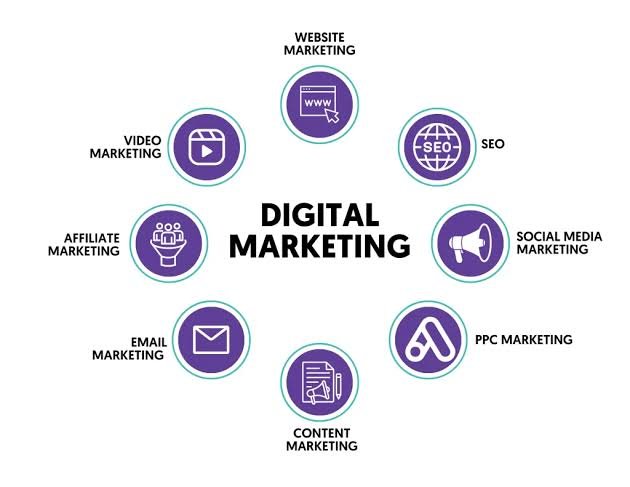
Some major areas of Google-focused digital marketing include:
- Search Engine Optimization
- Google Ads
- Google Business Profile
- Content marketing
- YouTube marketing
- Google Analytics
- Search performance monitoring
- Local SEO
- Display advertising
- Conversion optimization
When these channels are managed strategically, they can significantly improve a brand’s online presence.
Why Online Visibility Matters for Modern Businesses
Consumers increasingly use search engines to research products, compare services, read reviews, and find solutions to everyday problems.
If your business is difficult to discover online, potential customers may choose competitors that appear more prominently.
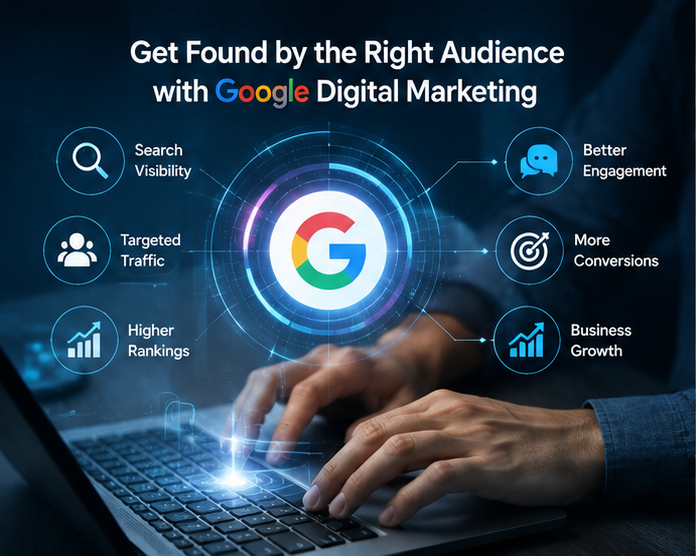
Better online visibility can help a business attract qualified traffic, increase brand awareness, generate leads, build credibility, and ultimately increase sales.
Visibility is not simply about getting the highest possible number of website visitors. The quality and relevance of those visitors are equally important.
A website receiving 5,000 visitors with little interest in its products may perform worse than one receiving 1,000 highly targeted visitors who are actively considering a purchase.
Effective Google digital marketing therefore focuses on attracting the right audience, not simply the largest audience.
1. Build a Strong SEO Foundation
Search engine optimization is one of the most important elements of long-term online visibility.
SEO involves improving a website so search engines can better understand its content while making the website useful and accessible to visitors.
Unlike paid advertising, organic visibility does not require paying for every click.
Start With Keyword Research
Keyword research helps identify the phrases people use when searching for information.
For example, a digital marketing company might target phrases such as:
- Digital marketing services
- SEO services for small businesses
- Google advertising agency
- Local SEO services
- How to improve website traffic
The objective should not be to insert these keywords everywhere. Instead, businesses should understand the intent behind searches and create content that genuinely answers users’ questions.
Optimize Content Naturally
A well-optimized webpage should have a clear title, descriptive headings, readable paragraphs, relevant internal links, useful information, and naturally placed keywords.
Your primary keyword can appear in strategic locations such as the page title, introduction, selected headings, URL, meta description, and main content.
However, keyword stuffing should always be avoided.
Google-focused SEO works best when content is created for real readers first.
2. Create Helpful, High-Quality Content
Content remains a central component of successful digital marketing.
People use Google because they want answers. Businesses that consistently provide useful answers can increase their opportunities to appear in relevant searches.
Content can include:
Blog Articles
Educational blog posts can target informational searches and introduce new visitors to your brand.
Product and Service Pages
These pages explain exactly what your business provides and can target visitors with stronger commercial intent.
Guides and Tutorials
Detailed guides can demonstrate expertise while helping visitors solve specific problems.
Comparison Content
Users frequently compare products, services, tools, and solutions before making decisions. Helpful comparisons can attract people during this important research stage.
The key is usefulness.
Publishing hundreds of shallow articles is not necessarily better than producing fewer high-quality resources that directly satisfy search intent.
3. Use Google Ads to Reach Targeted Customers
SEO can produce sustainable results, but it often requires time.
Google Ads can provide businesses with a faster way to appear in front of potential customers.
Search advertising allows advertisers to bid for visibility when people search for selected terms.
For example, a plumber could advertise when someone searches for an emergency plumbing service in the relevant location.
This makes search advertising particularly powerful because it can reach people who already have clear intent.
Create Relevant Ad Campaigns
Successful advertising campaigns require more than simply choosing keywords.
Businesses should pay attention to:
- Search intent
- Keyword relevance
- Advertisement quality
- Landing page experience
- Geographic targeting
- Device targeting
- Conversion tracking
- Budget management
- Negative keywords
A relevant advertisement should lead visitors to a page that directly matches what the advertisement promises.
Sending every visitor to a generic homepage can reduce the effectiveness of a campaign.
4. Improve Local Visibility With Google Business Profile
For businesses serving specific geographic areas, local search visibility can be extremely valuable.
Restaurants, clinics, repair companies, salons, retail stores, professional services, and many other local businesses can benefit from maintaining an accurate business presence across Google Search and Maps.
Businesses should keep important information updated, including their business name, operating hours, contact details, website, service information, photos, and other relevant details.
Customer Reviews Matter
Reviews can influence how potential customers perceive a business.
Companies should encourage genuine customers to provide honest feedback while responding professionally to both positive and negative reviews.
Businesses should never rely on fake or misleading reviews.
Authentic customer feedback provides much greater long-term value for reputation and credibility.
5. Take Advantage of YouTube Marketing
Video has become an important part of digital marketing, and YouTube provides businesses with opportunities to reach audiences through educational, entertaining, and product-focused content.
Businesses can create videos such as:
- Tutorials
- Product demonstrations
- Customer education
- Industry insights
- Frequently asked questions
- Product comparisons
- Behind-the-scenes content
- Expert interviews
Video content can support both brand awareness and customer education.
For example, a software company could create a tutorial demonstrating how to solve a common business problem using its platform.
Someone searching for that solution could discover the video, learn from it, and eventually explore the company’s product.
Optimize Videos for Discovery
Video titles and descriptions should clearly communicate what the content is about.
Rather than using vague titles, businesses should create titles that accurately match what their intended audience may be searching for.
The video itself should also deliver on the promise of its title.
6. Understand Your Audience Through Analytics
Digital marketing becomes much more effective when decisions are based on meaningful data.
Analytics tools can help businesses understand how visitors discover and interact with websites and marketing campaigns.
Important metrics may include:
Traffic sources: Where are visitors coming from?
Engagement: How are users interacting with the website?
Conversions: Are visitors completing important actions?
Landing pages: Which pages attract or convert visitors?
Devices: Are customers primarily using desktop computers or mobile devices?
Data allows marketers to identify what is working and what requires improvement.
Focus on Business Results
High traffic numbers can look impressive, but traffic alone does not necessarily mean a marketing campaign is successful.
Businesses should identify meaningful conversions.
Depending on the website, conversions could include:
- Product purchases
- Contact form submissions
- Phone calls
- Appointment requests
- Account registrations
- Newsletter subscriptions
- Software trials
The best metrics are those connected to genuine business objectives.
7. Optimize Your Website for Mobile Users
A large portion of online activity happens on smartphones.
A website that performs poorly on mobile devices can create a frustrating experience for visitors.
Mobile optimization should therefore be an essential part of Google digital marketing.
A mobile-friendly website should have readable text, simple navigation, responsive layouts, accessible buttons, optimized images, and reasonable loading performance.
Visitors should not need to repeatedly zoom in or scroll horizontally simply to understand the page.
Website Speed Matters
Slow websites can cause visitors to leave before engaging with the content.
Businesses can improve performance by compressing images, reducing unnecessary scripts, using appropriate caching, choosing reliable hosting, and keeping website software optimized.
Improving speed benefits both usability and overall website performance.
8. Combine SEO and Paid Advertising
Businesses sometimes treat SEO and Google Ads as competing strategies.
In reality, they can complement each other.
SEO can support long-term organic visibility, while paid campaigns can provide faster exposure for selected keywords, products, or offers.
For example, a new website may initially have limited organic search visibility. The business could use paid search campaigns while simultaneously developing its SEO strategy.
Over time, organic traffic may increase as useful content earns stronger visibility.
Meanwhile, advertising can continue supporting important commercial keywords and promotional campaigns.
The best approach depends on budget, competition, objectives, and customer behavior.
9. Build Trust and Authority
Visibility alone does not guarantee conversions.
Visitors also need reasons to trust the website.
Businesses can strengthen credibility by clearly presenting contact information, company details, expertise, policies, customer experiences, and accurate product or service information.
Content should also demonstrate genuine knowledge rather than being written only to target keywords.
When discussing complex subjects, businesses should prioritize accuracy and regularly review older content.
This is particularly important in industries where outdated information could negatively affect readers.
10. Use Search Intent to Create Better Content
One of the most useful concepts in modern SEO is search intent.
Search intent describes what a person actually wants when entering a query.
Someone searching “what is digital marketing?” is probably looking for information.
A person searching “best digital marketing agencies” may be comparing providers.
Someone searching “hire SEO agency” may be much closer to making a purchase.
Understanding these differences helps businesses create the correct type of page for each keyword.
Common Types of Search Intent
Informational: The user wants to learn something.
Navigational: The user wants to reach a particular website or brand.
Commercial: The user is researching options before making a decision.
Transactional: The user is ready or nearly ready to complete an action.
Matching content with search intent can improve both user experience and SEO effectiveness.
11. Avoid Common Google Digital Marketing Mistakes
Digital marketing campaigns can underperform when businesses focus on shortcuts rather than sustainable strategies.
One common mistake is keyword stuffing. Repeating the same phrase unnaturally can make an article difficult to read and does not create a good user experience.
Another mistake is publishing low-value content simply to increase the number of pages on a website.
Businesses should also avoid misleading advertisements, copied content, artificial reviews, irrelevant backlinks, and exaggerated claims.
For AdSense-focused websites in particular, original and genuinely helpful content is important. Pages should provide real value rather than being designed primarily around advertisements.
Best Practices for Better Online Visibility
Successful Google digital marketing usually comes from consistently improving multiple areas rather than relying on one technique.
Start by understanding what your audience is searching for. Build fast and mobile-friendly pages around those needs. Publish useful original content and optimize it naturally for relevant search terms.
Use advertising strategically where paid visibility makes business sense.
At the same time, track important performance indicators so marketing decisions are based on results rather than assumptions.
Finally, regularly review existing content. Updating an older article with more accurate information, improved structure, better examples, and clearer explanations can sometimes be more valuable than constantly publishing new pages.
Future of Google Digital Marketing
Digital marketing is becoming increasingly influenced by artificial intelligence, automation, machine learning, personalization, and changing search behavior.
Search experiences are also evolving beyond traditional lists of website links. Users can discover businesses through maps, videos, images, shopping experiences, advertisements, and AI-assisted search features.
For marketers, this means online visibility is becoming broader than traditional SEO.
Businesses will need to create content in formats that match how their audiences consume information.
At the same time, fundamental principles are unlikely to disappear.
People will continue looking for trustworthy information, convenient experiences, useful products, and reliable services.
Brands that genuinely satisfy these needs will be better positioned for sustainable digital growth.
Conclusion
Mastering Google digital marketing for better online visibility requires much more than placing a few keywords on a website.
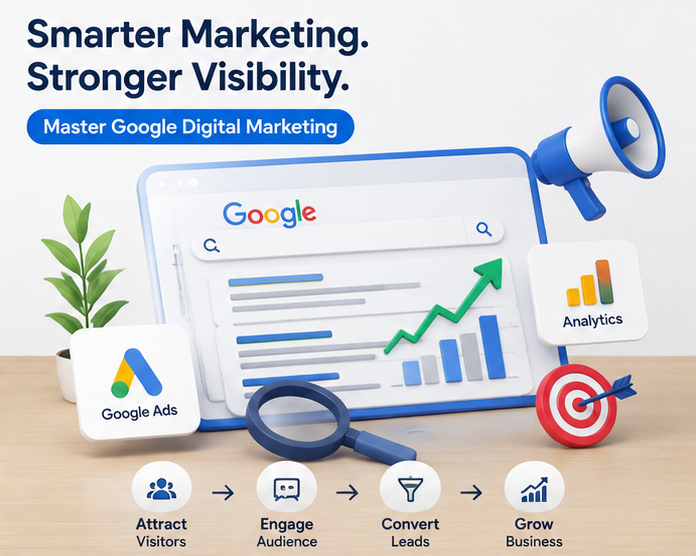
Businesses need a coordinated strategy involving SEO, valuable content, paid advertising, local visibility, video marketing, analytics, mobile optimization, and conversion tracking.
The strongest strategies focus on the customer first. Understand what people are searching for, provide genuinely useful information, make your website easy to use, and continuously measure the results.
Google’s platforms and search experiences will continue evolving, especially as artificial intelligence and automation become more influential. However, businesses that focus on relevance, quality, trust, and user experience will have a stronger foundation for adapting to those changes.
With consistent optimization and a clear strategy, Google digital marketing can help businesses increase visibility, attract qualified audiences, strengthen brand recognition, and create sustainable online growth.