Is Google Digital Marketing Worth It? An Honest Review for Beginners in 2026

Digital marketing has become one of the fastest-growing and most in-demand career fields in the modern business world. Companies of every size rely on digital channels to promote products, attract customers, generate leads, and increase revenue. As businesses continue investing in their online presence, the demand for skilled digital marketers keeps rising across industries such as e-commerce, healthcare, education, finance, technology, and entertainment.
If you’re thinking about starting a career in online marketing, you’ve probably come across the Google Digital Marketing Certificate. It has become one of the most popular beginner-friendly programs for learning digital marketing fundamentals. But many people still ask the same question: Is Google Digital Marketing Worth It?
The short answer is yes—for most beginners. However, the real value depends on your goals, learning commitment, and how you apply the skills after completing the course.
In this detailed guide, we’ll explore everything you need to know about Google Digital Marketing, including what you’ll learn, its advantages and limitations, career opportunities, salary expectations, and whether it’s worth your time and investment in 2026.
What Is Google Digital Marketing?
Google Digital Marketing is an entry-level professional learning program designed to teach beginners the essential skills needed for today’s digital marketing industry.
Rather than focusing only on theory, the course combines practical lessons, real-world business examples, quizzes, and hands-on activities to help learners understand how successful online marketing campaigns work.
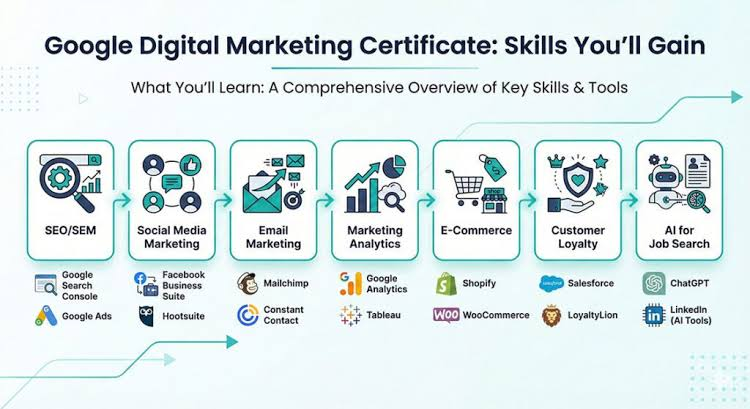
Throughout the program, you’ll learn:
- Digital marketing fundamentals
- Search Engine Optimization (SEO)
- Search Engine Marketing (SEM)
- Google Ads basics
- Social media marketing
- Content marketing
- Email marketing
- Marketing analytics
- Customer behavior
- Online business strategies
The course is designed to prepare learners for entry-level digital marketing roles without requiring previous marketing experience.
Who Should Take This Course?
The Google Digital Marketing program is suitable for a wide range of learners.
It is especially recommended for:
- Students
- College graduates
- Career changers
- Small business owners
- Entrepreneurs
- Freelancers
- Bloggers
- Content creators
- Marketing assistants
- Anyone interested in online business
No previous marketing knowledge is required.
Do You Need Technical Skills?
One of the biggest advantages of the program is that no advanced technical knowledge is required.
You don’t need experience with:
- Programming
- Coding
- Web development
- Graphic design
- Artificial Intelligence
- Data Science
The course explains marketing concepts using beginner-friendly language and practical examples.
What Will You Learn?
The Google Digital Marketing program introduces learners to the most important areas of online marketing.
Digital Marketing Fundamentals
You’ll learn:
- What digital marketing is
- How online marketing works
- Marketing channels
- Customer journeys
- Business objectives
This module builds the foundation for the rest of the course.
Search Engine Optimization (SEO)
SEO helps websites rank higher on search engines like Google.
You’ll learn:
- Keyword research
- On-page SEO
- Technical SEO basics
- Content optimization
- Link-building fundamentals
- Website optimization
SEO remains one of the most valuable digital marketing skills.
Search Engine Marketing (SEM)
The course introduces paid online advertising.
Topics include:
- Google Ads
- Pay-Per-Click (PPC)
- Keyword targeting
- Campaign setup
- Budget management
- Performance tracking
SEM helps businesses attract targeted visitors quickly.
Social Media Marketing
You’ll discover how businesses use social platforms to build their brands.
Topics include:
- Content planning
- Audience engagement
- Organic marketing
- Campaign creation
- Brand awareness
Social media marketing continues to play an important role in business growth.
Content Marketing
Content is the foundation of successful digital marketing.
You’ll learn how to create:
- Blog articles
- Website pages
- Product descriptions
- Marketing campaigns
- Educational content
- Customer-focused content
High-quality content improves both SEO and customer engagement.
Email Marketing
Email remains one of the highest-performing digital marketing channels.
You’ll learn:
- Email campaigns
- Audience segmentation
- Personalization
- Automation basics
- Performance measurement
Email marketing helps businesses build long-term customer relationships.
Marketing Analytics
Successful marketers measure campaign performance.
You’ll learn how to analyze:
- Website traffic
- Click-through rates
- Conversion rates
- Customer behavior
- Campaign performance
- Marketing reports
Analytics help businesses make smarter marketing decisions.
Why Google Digital Marketing Is Worth It
There are several reasons why many beginners choose this program.
Beginner-Friendly Learning
The course is specifically designed for learners with no previous marketing experience.
Lessons are simple, well-organized, and easy to understand.
Practical Skills
Rather than focusing only on theory, the program teaches skills that marketers use in real workplaces.
Hands-on exercises help learners apply what they’ve learned.
Flexible Schedule
The course is self-paced, making it ideal for students, professionals, and busy learners.
You can study whenever it fits your schedule.
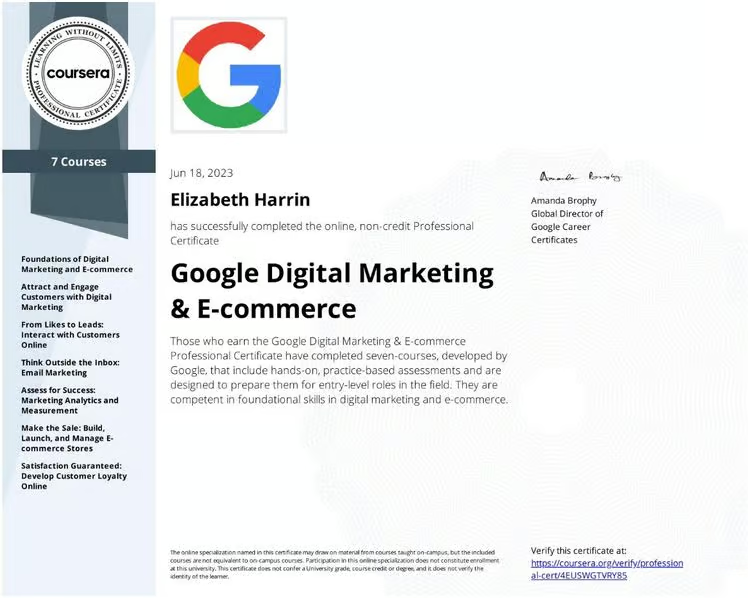
Google Professional Certificate
After completing the program, you’ll earn a Google Professional Certificate that demonstrates your commitment to learning digital marketing skills.
While a certificate alone won’t guarantee a job, it can strengthen your resume and professional profile.
High Demand for Digital Marketers
Businesses continue investing in online advertising, SEO, content marketing, and social media.
As a result, skilled digital marketers remain in demand across many industries.
Potential Limitations
Although the program offers excellent value, it also has a few limitations.
It’s Designed for Beginners
The course focuses on foundational marketing concepts rather than advanced topics like marketing automation, conversion rate optimization, advanced SEO, or enterprise advertising.
You’ll likely need additional learning as your career grows.
Practical Experience Is Essential
Completing the course alone isn’t enough.
Employers value candidates who can demonstrate practical skills through portfolios, websites, freelance work, internships, or personal marketing projects.
Marketing Changes Frequently
Search engine algorithms, advertising platforms, and consumer behavior evolve constantly.
Successful marketers continue learning throughout their careers.
Pros and Cons
Pros
- Beginner-friendly curriculum
- No previous experience required
- Self-paced learning
- Practical marketing skills
- Covers SEO, content marketing, email marketing, and analytics
- Includes real-world business examples
- Google Professional Certificate enhances your resume
- Flexible learning schedule
- Excellent foundation for digital marketing careers
Cons
- Doesn’t cover advanced marketing strategies in depth
- Requires additional practice for real-world expertise
- Certification alone doesn’t guarantee employment
- Continuous learning is necessary due to industry changes
Career Opportunities After Completing the Program
Google Digital Marketing can help prepare learners for positions such as:
- Digital Marketing Specialist
- SEO Specialist
- Content Marketing Specialist
- Social Media Manager
- PPC Specialist
- Marketing Coordinator
- Email Marketing Specialist
- E-commerce Marketing Assistant
- Marketing Executive
- Digital Marketing Assistant
Many professionals also use these skills to build freelance careers or grow their own online businesses.
Salary Potential
Digital marketing salaries vary depending on experience, location, and industry.
Entry-level professionals generally earn competitive salaries, while experienced specialists in SEO, PPC, content marketing, or digital strategy can significantly increase their earning potential over time.
Freelancers and consultants may also earn additional income by working with multiple clients.
Tips to Get the Most from the Course
To maximize your success:
Practice SEO
Create your own website or blog to apply SEO techniques.
Learn Google Ads
Experiment with small advertising campaigns to understand how paid marketing works.
Build Real Projects
Create marketing campaigns, write blog content, or manage social media accounts to develop practical experience.
Continue Learning
Explore advanced topics such as Google Analytics 4 (GA4), Google Tag Manager, marketing automation, conversion rate optimization (CRO), and AI-powered marketing tools.
Common Mistakes Beginners Should Avoid
Many learners make similar mistakes.
Avoid:
- Ignoring SEO fundamentals
- Focusing only on social media
- Skipping analytics lessons
- Creating content without understanding the target audience
- Expecting immediate career success after certification
- Not practicing with real projects
The more you apply your knowledge, the more valuable your skills become.
Frequently Asked Questions
Is Google Digital Marketing suitable for complete beginners?
Yes. The course is specifically designed for learners with no previous digital marketing experience.
Do I need coding skills?
No. Programming or web development knowledge is not required.
Can I get a job after completing the course?
The certificate helps build foundational knowledge and can strengthen your resume. Combining it with hands-on projects, a portfolio, and continued learning can improve your chances of landing an entry-level digital marketing role.
How long does the course take?
The program is self-paced, allowing learners to progress according to their own schedules.
Is Google Digital Marketing worth it in 2026?
Yes. As businesses continue expanding their digital presence, digital marketing remains one of the most valuable and in-demand career skills worldwide.

Final Thoughts
So, Is Google Digital Marketing Worth It? For most beginners, the answer is yes. The program offers a well-structured introduction to digital marketing, covering essential skills such as SEO, content marketing, social media marketing, email marketing, online advertising, and analytics. Its beginner-friendly approach makes it accessible to students, career changers, freelancers, and business owners who want to build practical marketing knowledge.
While the certificate alone won’t guarantee a job, it provides a strong foundation that can open the door to entry-level opportunities. By combining the course with hands-on projects, a professional portfolio, and continuous learning, you can significantly improve your career prospects. Whether your goal is to work for a company, start freelancing, or grow your own business, the Google Digital Marketing program is a worthwhile investment for anyone looking to succeed in the digital economy in 2026 and beyond.