Cybersecurity has become one of the most important fields in the technology industry. As organizations continue moving their operations online, protecting digital systems, networks, and sensitive information has become a major priority.
Every year, businesses face increasing risks from cyber threats such as phishing, ransomware, malware, data breaches, and identity attacks. This growing demand for security professionals has attracted many beginners who want to start a career in cybersecurity.
However, entering cybersecurity can be confusing. Beginners often wonder:
- Which skills should I learn first?
- Do I need a computer science degree?
- Is a certificate enough to get a job?
- Is the Google Cybersecurity Certificate worth it in 2026?
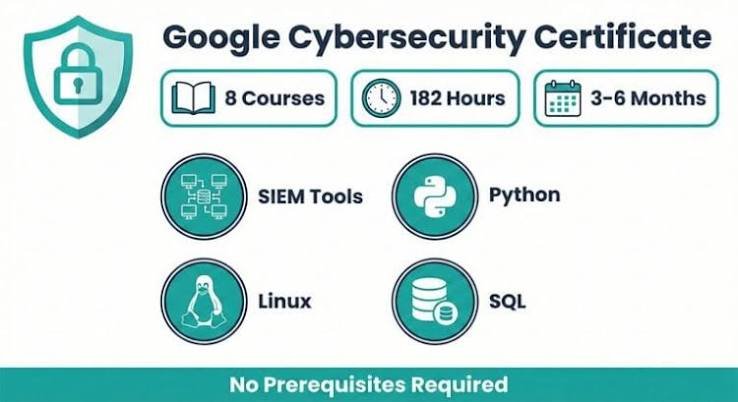
The Google Cybersecurity Professional Certificate is designed to help beginners build foundational cybersecurity knowledge and prepare for entry-level roles.
This guide reviews the certificate, explains the skills you learn, explores career paths, and discusses whether it is a good investment for beginners in 2026.
What Is the Google Cybersecurity Professional Certificate?
The Google Cybersecurity Professional Certificate is an online training program created for beginners who want to enter the cybersecurity field.
The program focuses on practical cybersecurity concepts, including:
- Cybersecurity fundamentals
- Network security
- Linux
- SQL
- Python basics
- Threat detection
- Security monitoring
- Incident response
- Risk management
It is designed for people with little or no cybersecurity experience.
You do not need:
- A technology degree
- Previous security experience
- Advanced programming skills
The goal is to help learners build the foundation needed for entry-level cybersecurity jobs.
Why Cybersecurity Is a Strong Career Choice in 2026
Cybersecurity continues to grow because technology is becoming more connected.
Organizations depend on:
- Cloud platforms
- Online services
- Mobile applications
- Digital payments
- Remote work systems
Every connected system creates potential security risks.
Companies need cybersecurity professionals to help:
- Prevent attacks
- Monitor systems
- Protect data
- Investigate incidents
- Improve security practices
Cybersecurity careers can provide opportunities in many industries, including:
- Technology
- Finance
- Healthcare
- Government
- Education
- Retail
What Skills Do You Learn in the Google Cybersecurity Certificate?
The certificate focuses on practical skills that beginners can use as a foundation.
1. Cybersecurity Fundamentals
You learn the basics of cybersecurity, including:
- Common security threats
- Attack methods
- Security principles
- Security roles
- Protection strategies
This helps you understand how cybersecurity professionals approach digital protection.
2. Network Security
Networking knowledge is essential for cybersecurity.
You learn:
- How networks communicate
- Network vulnerabilities
- Security controls
- Firewalls
- Network protection methods
Understanding networks helps security professionals identify suspicious activity and protect systems.
3. Linux Skills
Linux is widely used in cybersecurity and server environments.
You learn:
- Basic Linux commands
- File management
- Permissions
- System navigation
Linux knowledge is valuable because many cybersecurity tools and systems run on Linux.
4. SQL Skills
Cybersecurity professionals often analyze large amounts of data.
The certificate introduces SQL concepts such as:
- Searching databases
- Filtering information
- Understanding queries
- Investigating data
SQL helps security analysts examine information and identify possible threats.
5. Python Programming Basics
Programming skills can improve cybersecurity work.
You learn basic Python concepts, including:
- Variables
- Functions
- Loops
- Automation
Python can help security professionals:
- Automate tasks
- Analyze data
- Create simple scripts
6. Threat Detection and Security Monitoring
You learn how security teams identify potential threats.
Skills include:
- Reviewing security information
- Understanding alerts
- Identifying suspicious activity
- Supporting investigations
These skills are important for Security Operations Center (SOC) roles.
7. Incident Response
The certificate introduces how organizations respond to cybersecurity incidents.
You learn the process of:
- Identifying threats
- Containing damage
- Removing security issues
- Recovering systems
- Documenting incidents
Incident response is a key responsibility in many cybersecurity jobs.
Career Paths After Google Cybersecurity Certificate
The certificate can help beginners explore several cybersecurity career paths.
1. Security Operations Center (SOC) Analyst
A SOC analyst is often one of the first cybersecurity roles for beginners.
Responsibilities include:
- Monitoring security alerts
- Investigating suspicious activity
- Reviewing logs
- Reporting incidents
Skills needed:
- Networking
- Security tools
- Threat analysis
- Problem-solving
2. Cybersecurity Analyst
Cybersecurity analysts help organizations protect systems and information.
Common tasks include:
- Assessing security risks
- Monitoring networks
- Investigating incidents
- Improving security controls
This role requires both technical knowledge and analytical thinking.
3. IT Security Specialist
IT security specialists combine IT knowledge with security practices.
They may work on:
- Access control
- System protection
- Security policies
- Device security
This can be a good transition role for people coming from IT support.
4. Security Technician
Security technicians assist cybersecurity teams with tasks such as:
- System monitoring
- Security documentation
- Basic troubleshooting
- Security maintenance
This can be an entry point into more advanced cybersecurity careers.
5. Risk and Compliance Roles
Not all cybersecurity jobs are highly technical.
Some professionals focus on:
- Security policies
- Risk assessments
- Compliance requirements
- Security documentation
These roles are important because organizations must follow security standards and regulations.
Is the Google Cybersecurity Certificate Enough to Get a Job?
A common question beginners ask is whether completing the certificate guarantees employment.
The answer is no.
The certificate can help you:
- Learn important concepts
- Build foundational skills
- Understand cybersecurity careers
- Improve your resume
However, employers usually want more than a certificate.
They also look for:
- Hands-on experience
- Technical practice
- Problem-solving skills
- Projects
- Communication ability
The certificate is a starting point, not a complete career solution.
How to Increase Your Chances of Getting a Cybersecurity Job
1. Build a Home Lab
A home lab allows you to practice cybersecurity safely.
You can experiment with:
- Virtual machines
- Linux systems
- Network setups
- Security tools
Practical experience helps turn theory into real skills.
2. Create Cybersecurity Projects
Projects can strengthen your portfolio.
Examples:
- Analyze security logs
- Set up a secure network
- Practice vulnerability testing
- Create Python automation scripts
- Document security investigations
Projects show employers that you can apply your knowledge.
3. Learn Networking
Strong networking knowledge is extremely valuable.
Study:
- TCP/IP
- DNS
- Firewalls
- Network protocols
- Routing concepts
Many cybersecurity problems involve network activity.
4. Continue With Additional Certifications
After building fundamentals, many learners explore certifications such as:
- CompTIA Security+
- CompTIA Network+
- Cloud security certifications
- Other cybersecurity certifications
Additional certifications can help demonstrate specialized knowledge.
Google Cybersecurity Certificate vs Google IT Support Certificate
Both certificates are beginner-friendly but focus on different areas.
Google Cybersecurity Certificate
Best for:
- Security-focused careers
- Future cybersecurity analysts
- Threat detection interests
Focus:
- Security
- Threats
- Monitoring
- Incident response
Google IT Support Certificate
Best for:
- General IT careers
- Help desk roles
- Technical support
Focus:
- Hardware
- Troubleshooting
- Operating systems
- Networking basics
A common path is to start with IT fundamentals and then specialize in cybersecurity.
Advantages of the Google Cybersecurity Certificate
Beginner Friendly
It provides a structured learning path for people starting from zero.
Practical Foundation
It introduces real cybersecurity concepts used in professional environments.
Flexible Learning
Online learning allows students and working professionals to study at their own pace.
Career Exploration
It helps beginners understand whether cybersecurity matches their interests.
Limitations of the Google Cybersecurity Certificate
It Does Not Make You a Cybersecurity Expert
Cybersecurity requires continuous learning and practice.
It Does Not Replace Experience
Employers value real-world skills gained through projects and practice.
Advanced Roles Require More Learning
Areas like:
- Penetration testing
- Cloud security
- Digital forensics
- Security engineering
require additional training.
Who Should Take the Google Cybersecurity Certificate in 2026?
The certificate is a good option for:
✔ Beginners interested in cybersecurity
✔ Career changers entering technology
✔ IT support professionals moving into security
✔ Students exploring tech careers
✔ Professionals wanting cybersecurity knowledge
It may not be the best choice for people who already have advanced IT or security experience.
Final Verdict: Is Google Cybersecurity Certificate Worth It in 2026?
For beginners, the Google Cybersecurity Professional Certificate is worth considering in 2026 because it provides a clear introduction to cybersecurity fundamentals and helps learners build important technical skills.
Its strongest value is giving beginners a structured starting point. It teaches concepts such as networking, Linux, security monitoring, Python basics, and incident response—skills that can support future cybersecurity learning.
However, career success requires more than completing a course. The best results come from combining the certificate with hands-on practice, personal projects, networking knowledge, and continuous learning.
For someone starting from zero and looking for a pathway into cybersecurity, the Google Cybersecurity Certificate can be a valuable first step toward building a career in the growing field of digital security.